

Can anyone work in nursing? Lateral entry explained - requirements, opportunities and paths
A lateral entry enables people without a traditional nursing training For many, this offers the opportunity to change careers into a meaningful field of activity with long-term prospects in a stable, socially relevant area. In many regions of Brandenburg, there is a high demand for dedicated nursing staff, which makes lateral entry an attractive option.
Nursing is a central pillar for the functioning of society. For people who are looking for a new direction or security, lateral entry offers the opportunity to combine personal and professional development with a contribution to the common good. The growing demands in the healthcare sector offer optimal opportunities for a professional career in all areas of nursing and geriatric care, including for career changers.
What does lateral entry into nursing mean?
A career change into nursing enables people from non-specialist sectors to work in outpatient, inpatient or home care and to look after and care for those in need of care. Motives such as the desire for social commitment, the search for stability or personal experience with care often play a role. The career change is not a coincidence, but a deliberate step that opens up new perspectives.
In contrast to traditional careers, which require regular nursing training, the focus is on integrating new professionals from different professional fields who qualify and train in various stages. There are numerous qualification options to choose from. From care for the elderly or everyday help to becoming a care specialist, there are many paths open to career changers in the care sector.
Requirements for a career change into care
Anyone planning a career change into the care sector should fulfill basic requirements that make it easier to get started.
Both personal characteristics and formal criteria play a role here:
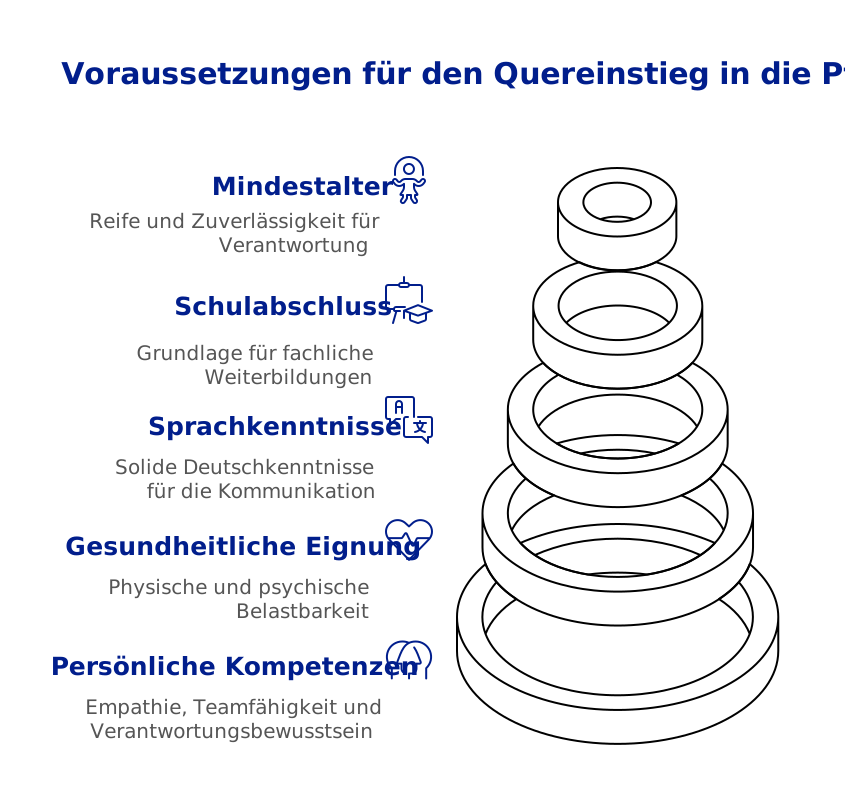
Minimum age: care work entails responsibility, so a certain level of maturity and reliability is required.
School-leaving certificate: A school-leaving certificate forms the basis for further specialist training and makes it easier to learn new skills.
Language skills: Solid German language skills are crucial to ensure communication with those in need of care and colleagues.
Health aptitude: Physical and mental resilience are important, as day-to-day care work places a variety of demands on body and mind.
Personal skills: Empathy, the ability to work in a team and a sense of responsibility in dealing with people help to meet the special demands of the nursing profession.
Paths and opportunities for career changers in the care sector
For people with no previous nursing training, there are various ways to enter the profession. Special offers provide practical and systematic support in acquiring relevant knowledge and skills. The aim is to offer career changers a variety of options that provide both orientation and qualification.
The most important paths include
Retraining programs: Structured programmes teach basic nursing skills and lead to a recognized qualification within a fixed time frame.
Further training courses: Advanced training courses provide targeted basic knowledge and facilitate entry into support activities.
Entry-level qualifications: Short-term measures enable the rapid acquisition of key skills and prompt employment.
Practice-oriented internships: Internships in care facilities (link -Get to know care professions) offer low-threshold insights into everyday working life and initial practical experience.
Work shadowing and familiarization programmes: Short programs allow people to get to know nursing work at close quarters without immediately making extensive commitments.
Accompanying qualification measures: Supplementary offerings provide individual support and provide targeted preparation for further training.
There are numerous entry options, from a 400-hour basic nursing course to courses that also qualify for managerial positions in the care sector. Many courses have a modular structure and can therefore also be attended part-time and part-time. Some providers have specialized in career changers or people without training, which can be helpful when starting out.
In Brandenburg, care courses and training are often recognized by the state and can therefore be co-financed via funding programmes or existing facilities.

Brandenburg skilled workers portal: Professional orientation for entry into the care sector
Anyone who wants to work in the care sector often faces questions about qualifications, training, recognition of qualifications and regional particularities. Career changers and people with foreign qualifications in particular benefit from professional guidance to help them find the right path into the care sector.
The Brandenburg skilled workers portal offers extensive information on this. It provides current job and training vacancies, information on the recognition of qualifications and explains the requirements for working in Brandenburg. The portal also provides information on regional particularities and enables contact with care facilities. Anyone wishing to find out about the opportunities for entering the care sector will receive initial guidance to help them examine their own path and plan their next steps.
Professional and personal opportunities as a care worker for career changers
A career change into nursing offers stable career prospects and a wide range of development opportunities. The demand for qualified nursing staff remains high in the long term, so there are good chances of finding secure employment. There are also clear opportunities for promotion: Those who have gained initial professional experience can acquire additional qualifications and gradually take on more responsible tasks.
In recent years, the nursing profession has been significantly upgraded. In addition to career security, nursing also offers good financial development opportunities. It also allows you to contribute directly to social cohesion and gain experience that creates satisfaction and fulfillment. Many find the social recognition and appreciation of the nursing profession motivating. Anyone who wants to start a new career will find a job that combines security, meaning and development - and thus a real perspective for their own future.
Summary: lateral entry into nursing
The question of whether anyone can work in nursing can be answered in different ways: it is generally possible to enter the field, even without traditional training, as long as certain formal requirements are met and personal characteristics match the field of work. Anyone who is interested in a meaningful profession, is physically and mentally resilient and has a sense of responsibility and empathy has a realistic chance of starting a new career in the care sector. There are various ways for career changers to get started - from retraining and further education courses to internships or qualification measures. At the same time, nursing care offers long-term career security, development opportunities and the experience of making a socially relevant contribution.