

Care meets innovation: how is AI used in care?
Artificial intelligence (AI) is becoming increasingly important in care, as it automates routine bureaucratic tasks and supports decision-making processes. The aim is to make work processes more efficient and improve the quality of care. AI systems analyze large amounts of data, recognize patterns and provide appropriate recommendations based on the situation, using methods such as machine learning and neural networks (neural networks learn patterns and relationships from training data).
The use of AI in nursing is intended to relieve and support nursing staff in their daily work. It takes over repetitive tasks, prepares decisions and thus frees up time for direct contact with patients. For young professionals and specialists, the use of digital technologies and AI applications is increasingly becoming a central part of everyday working life, increasing efficiency and ensuring the quality of care in the long term.
Innovative areas of application: Where is AI being used in care?
AI is increasingly being used in care to make everyday life easier for care staff and those in need of care, without replacing interpersonal care.
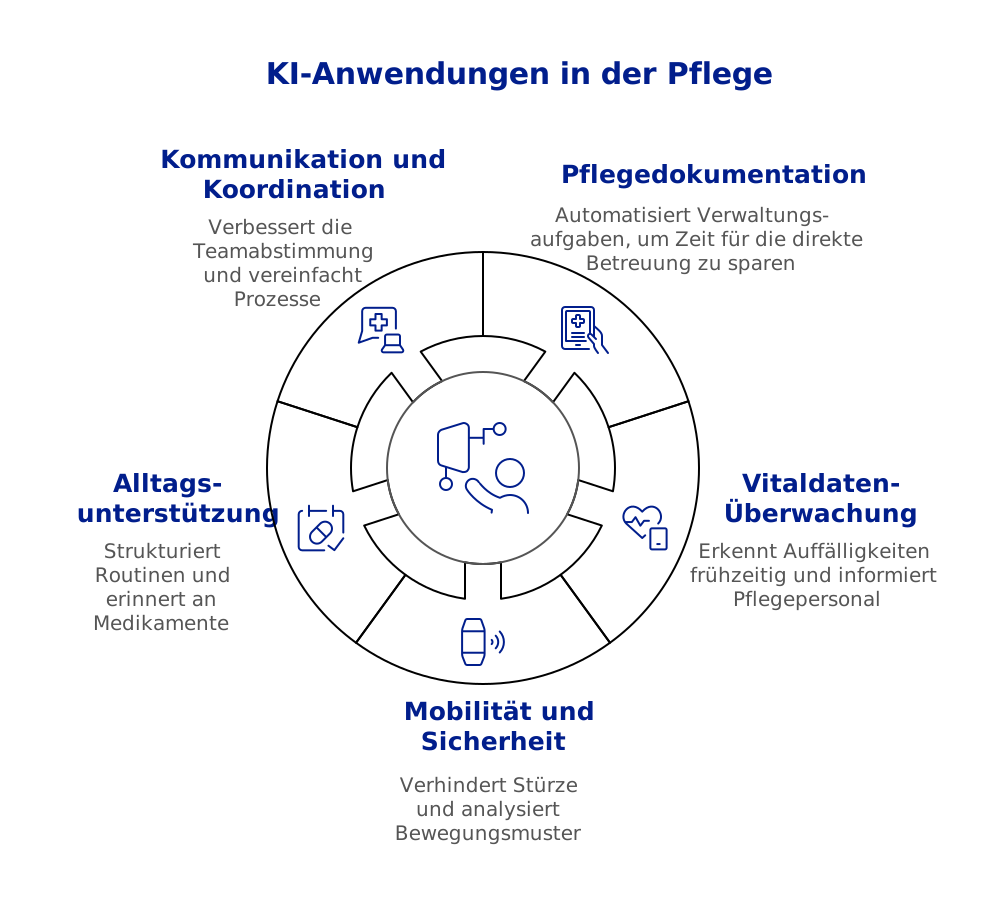
Possible areas of application can be summarized as follows:
- Care documentation: AI-supported systems automatically record recurring administrative tasks, leaving more time for direct care and treatment.
- Vital data monitoring: Intelligent applications detect abnormalities at an early stage and inform nursing staff specifically about changes in patients.
- Mobility and safety: AI-supported sensor technologies are used in inpatient facilities to detect the risk of falls, analyze movement patterns and automatically generate alerts if necessary.
- Everyday support at home: AI helps to structure the daily routine, reminds people to take their medication and adapts processes to the individual needs of those in need of care.
- Communication and coordination: Digital solutions improve coordination within care teams and make it easier to organize complex care processes.
Opportunities and benefits: How do care staff and patients benefit?
The use of digital technologies and artificial intelligence in care brings noticeable relief.
z. For nursing staff, for example:
- Automation of routine tasks, freeing up more time for direct care
- Relief from organizational and administrative tasks
- Improved efficiency and structure in day-to-day work
- Strengthening team coordination and job satisfaction (the digitalization of work and team processes requires the employer to provide appropriate resources in terms of change management).
z. e.g. for patients:
- Personalized and needs-based care
- Early detection of changes in health status through automated analyses
- Transparent and comprehensible treatment processes
- Greater safety in everyday life and higher quality of life

Professional support and career opportunities: The Brandenburg skilled workers portal as a guide
The Brandenburg Skilled Workers Portal offers a central online platform for skilled workers and anyone interested in working in the care sector. It combines job and training opportunities in the state of Brandenburg with comprehensive information on qualifications, nursing training and entry opportunities, thus providing support in accessing suitable jobs in the care sector.
The portal also provides information on the recognition of qualifications acquired abroad and on further training and qualification opportunities. This provides users with orientation and practical assistance in planning their entry or further development in the care profession and finding suitable jobs or training positions.
Challenges and limitations: What do nurses need to know?
The use of artificial intelligence in care brings with it various challenges.
They include:
- Technical adaptations: New digital tools change established processes and require continuous training.
- Traceability and responsibility: Machine analyses are often complex, which can create uncertainty when it comes to decisions and liability.
- Data protection/ethics: Handling and protecting sensitive patient data is challenging, as AI systems process large amounts of personal information and compliance with ethical and legal standards must be ensured at all times.
- Human care: AI must not replace personal contact with patients; the balance between technology and care must be maintained.
- Organization: Integration of new systems requires careful planning and adaptation of work processes.
How will AI develop in the care sector?
AI in care will become more specialized and more integrated into everyday life in the future. Intelligent assistance systems can take over tasks such as the predictive planning of care processes and support personalized care. The aim is to make the everyday lives of care staff and patients more flexible and to take individual needs into account in a more targeted manner.
At the same time, new job profiles are emerging in which technological skills and collaboration with digital systems are becoming increasingly important. Nursing staff can concentrate on activities that go beyond traditional care routines, while AI takes over and relieves repetitive tasks. Digitalization thus opens up opportunities for more efficient processes, better care and a sustainable strengthening of the nursing profession.
You can also find more in-depth information on this topic at
Digitalization in care from a diaconal perspective - an impulse paper
Ethical issues of digital care planning and care documentation
Digitalization, AI and care: in search of the digital dividend